
Common Spinal Conditions
Common Spinal Conditions
Specialized diagnosis and treatment. Degenerative, Traumatic, Infectious, Tumoral, and Osteoporosis-related conditions.
Specialized diagnosis and treatment. Degenerative, Traumatic, Infectious, Tumoral, and Osteoporosis-related conditions.
Spinal Disorders — Diagnosis and Treatment
Common spinal conditions
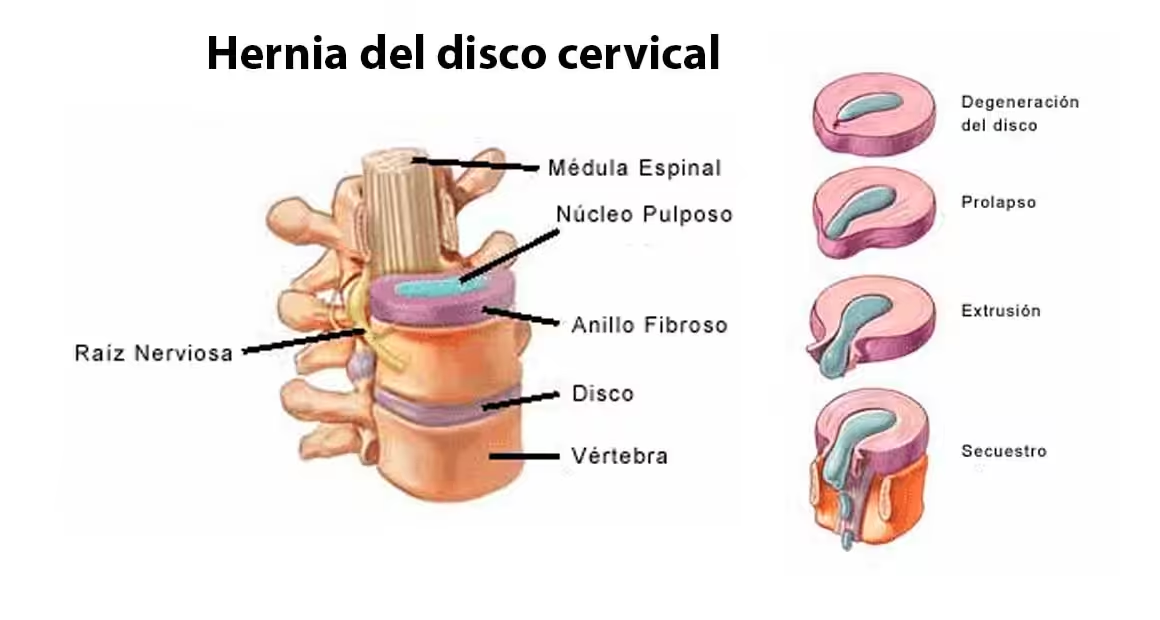
Cervical Herniated Disc
A cervical herniated disc occurs when the core of an intervertebral disc in the cervical spine protrudes or ruptures through its outer lining, compressing the spinal cord or nerve roots. It is one of the most common causes of neck pain radiating into the arm.
Symptoms: Neck pain, numbness and weakness in the arms and hands, tingling in the fingers.
Treatment: From physical therapy and medication to minimally invasive cervical spine surgery depending on the severity of the case.
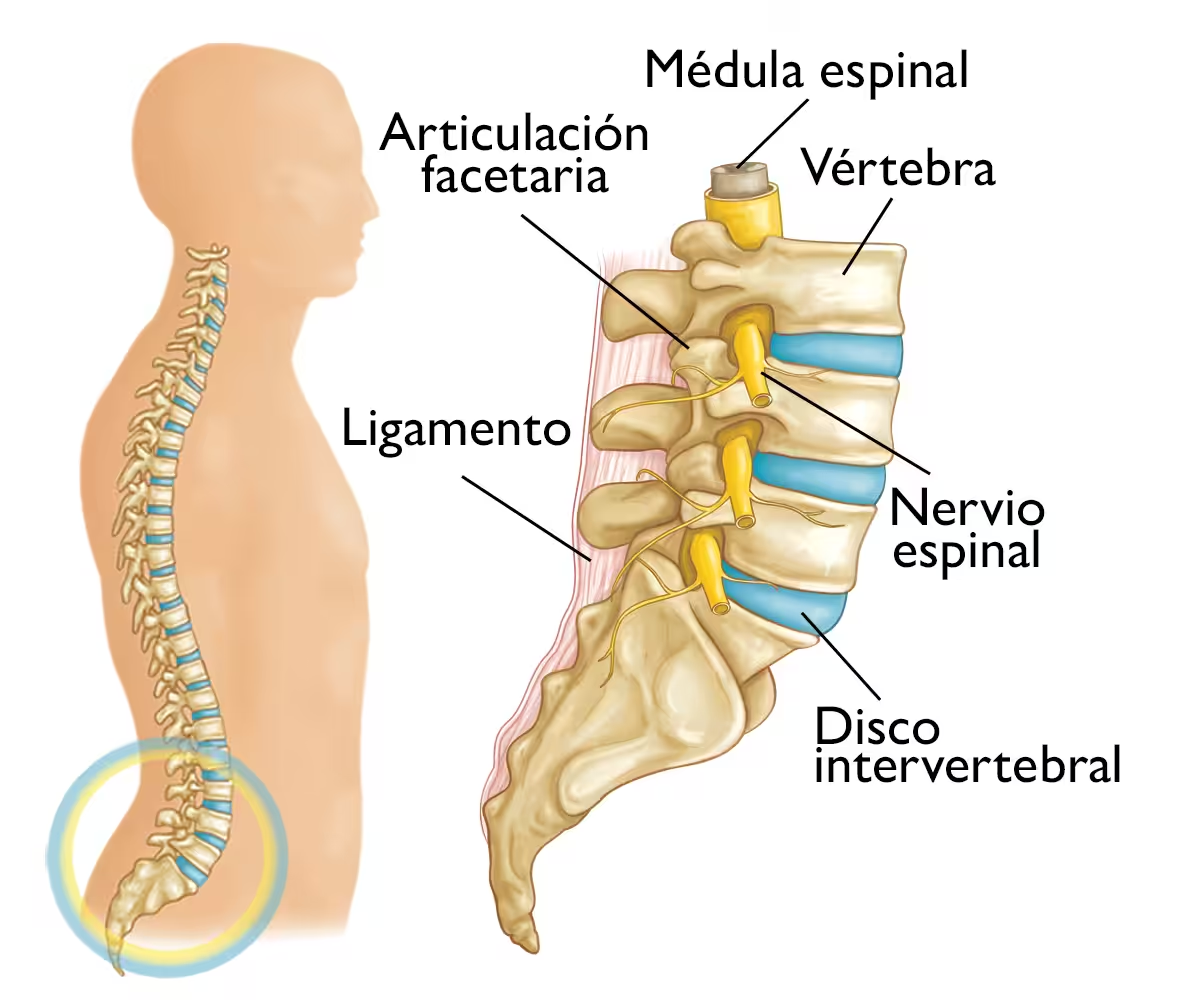
Lumbar Herniated Disc
A lumbar herniated disc occurs when the disc core in the lower back protrudes and compresses the nerve roots. It is the most common cause of sciatica — pain that travels down the leg from the buttock to the foot.
Symptoms: Lower back pain, pain radiating to the leg and foot, numbness, muscle weakness, and difficulty walking.
Treatment: Physical therapy, anti-inflammatory medications, epidural injections, and minimally invasive discectomy when necessary.
Cervical Spinal Stenosis
Cervical stenosis is the narrowing of the spinal canal in the neck, compressing the spinal cord and nerve roots. It can lead to cervical myelopathy — spinal cord damage with loss of motor and sensory function.
Symptoms: Neck pain, numbness and weakness in the arms and hands, difficulty walking, loss of balance.
Treatment: Surgical decompression through laminectomy or cervical fusion when symptoms are progressive or severe.


Lumbar Spinal Stenosis
Lumbar stenosis is the narrowing of the spinal canal in the lower back. It compresses the spinal cord and nerves, causing pain and inability to walk long distances — a symptom known as neurogenic claudication.
Symptoms: Lower back pain, leg pain when walking that improves when sitting, numbness and weakness in the lower extremities.
Treatment: Lumbar laminectomy or minimally invasive laminotomy to decompress the spinal canal and restore mobility.
Lumbar Spinal Stenosis
Lumbar spinal stenosis is the narrowing of the space within the spinal canal in the lower back, putting pressure on the spinal nerves. It can cause chronic pain, difficulty walking, and loss of quality of life.
Symptoms: Leg pain when walking, relief when leaning forward or sitting, weakness and numbness in the extremities.
Treatment: Surgical decompression through laminectomy or minimally invasive endoscopic procedures.


Spondylolisthesis
Spondylolisthesis occurs when one vertebra slips forward over the one below it. It causes spinal instability, chronic pain, and can compress spinal nerves if the slippage is significant.
Symptoms: Chronic lower back pain, pain radiating to the legs, feeling of instability when walking, hamstring tightness.
Treatment: Physical therapy and bracing in mild cases. Surgical spinal fusion when slippage is progressive or neurological symptoms are present.
Spondylosis (Spinal Osteoarthritis)
Spondylosis is the degenerative wear and tear of the intervertebral discs and facet joints, with bone spur formation. It is one of the most common causes of chronic back and neck pain in adults over 50.
Symptoms: Neck or lower back pain and stiffness, especially when getting up in the morning. It may radiate to the arms or legs.
Treatment: Physical therapy, anti-inflammatory medications, corticosteroid injections, and in advanced cases with nerve compression, decompressive surgery.


Degenerative Scoliosis
Degenerative scoliosis is a lateral curvature of the spine that develops in adults as a result of asymmetric wear of the discs and facet joints. It primarily affects people over 50 and can progress over time.
Symptoms: Chronic lower back pain, visible trunk deformity, pain radiating to the legs, difficulty standing upright.
Treatment: Physical therapy and bracing in mild cases. Corrective spine surgery when the curvature progresses or compromises the nerves.
Traumatic Conditions
Whiplash (Cervical Sprain)
Whiplash is a soft tissue injury of the neck caused by a sudden back-and-forth movement of the head, common in car accidents. It affects the cervical muscles, ligaments, and tendons.
Symptoms: Neck pain and stiffness, headaches, dizziness, difficulty moving the neck, and occasionally numbness in the arms.
Treatment: Rest, pain medication, cervical physical therapy, and a temporary orthopedic collar. Most cases resolve with conservative treatment.


Spinal Cord Injury
A spinal cord injury is severe damage that can cause permanent changes in strength, sensation, and bodily functions below the level of the injury. It can result in partial or complete paralysis depending on the location and severity of the damage.
Symptoms: Loss of movement or sensation, intense pain or pressure in the neck or back, difficulty breathing, loss of bladder or bowel control.
Treatment: This is a medical emergency. It requires urgent surgical stabilization followed by intensive multidisciplinary rehabilitation.
Vertebral Fractures
Vertebral fractures are breaks or cracks in the bones of the spine, ranging from small fissures to significant vertebral displacement. They can be caused by trauma, osteoporosis, or diseases that weaken the bone.
Symptoms: Acute, intense back pain that worsens when standing or walking; there may be visible deformity or neurological symptoms.
Treatment: Bracing, minimally invasive vertebroplasty or kyphoplasty, or surgical fixation for unstable fractures.


Post-Traumatic Lower Back Pain
Post-traumatic lower back pain is pain in the lower back that arises after an injury or trauma. It can be acute or develop into chronic pain that limits daily activities and quality of life.
Symptoms: Lower back pain that appears after an injury, may radiate to the buttocks and legs, stiffness, difficulty bending or lifting objects.
Treatment: Pain medication, physical therapy, rehabilitation therapy, and in cases with persistent structural damage, surgical evaluation.
Infectious Conditions
Discitis
Discitis is inflammation of the intervertebral disc space, usually caused by a bacterial or viral infection. It affects people of all ages and requires rapid diagnosis to prevent permanent damage to the spine.
Symptoms: Intense, localized back pain, fever, general malaise, spinal stiffness; in children it may present as refusal to walk.
Treatment: Intravenous antibiotics for several weeks, rest, and immobilization. In cases with abscess or instability, drainage or spine surgery.


Vertebral Osteomyelitis
Vertebral osteomyelitis is a serious infection of the vertebral bodies and intervertebral discs. If not treated promptly, it can cause bone destruction, spinal instability, and spinal cord compression with permanent neurological damage.
Symptoms: Progressive and intense back pain, fever, chills, weight loss. In advanced stages there may be weakness or paralysis of the extremities.
Treatment: Long-term antibiotics. In cases with vertebral destruction or epidural abscess, debridement surgery and spinal reconstruction.
Epidural Abscess
An epidural abscess is a collection of pus in the space surrounding the spinal cord. It is a medical emergency that can compress the spinal cord and cause irreversible paralysis if not treated immediately.
Symptoms: Severe and progressive back pain, high fever, weakness in the extremities, loss of sensation, difficulty urinating or having bowel movements.
Treatment: Emergency surgery to drain the abscess and decompress the spinal cord, followed by long-term intravenous antibiotics.

Tumoral Conditions

Metastatic Spine Disease
Metastatic spine disease is the spread of cancer from its original site to the spine. It is one of the most common complications of advanced breast, lung, prostate, and kidney cancers, among others.
Symptoms: Progressive back pain that does not improve with rest, leg weakness, loss of sensation, loss of bladder and bowel control in advanced cases.
Treatment: Spine surgery to decompress the spinal cord and stabilize the vertebra, combined with radiation therapy and chemotherapy depending on the type of primary cancer.
Primary Spinal Tumors
Primary spinal tumors are abnormal growths that originate in the vertebrae, vertebral arches, or discs. They can be benign or malignant and require specialized evaluation to determine the best treatment.
Symptoms: Persistent back pain that does not improve with rest or pain medication, progressive weakness in the extremities, visible vertebral deformity in advanced cases.
Treatment: Tumor resection surgery, vertebral reconstruction, and stabilization. It may be supplemented with radiation therapy or chemotherapy depending on the histological type.

Osteoporosis and Fragility Fractures

Vertebral Fractures por Fragilidad
Vertebral fragility fractures occur when vertebrae fracture due to the bone weakness caused by osteoporosis, without significant trauma. They are most common in postmenopausal women and older adults. They can occur from coughing, bending over, or lifting a light object.
Symptoms: Sudden onset of acute, intense back pain, progressive loss of height, kyphosis (hunchback), severe functional limitation.
Treatment: Minimally invasive vertebroplasty or kyphoplasty to stabilize the fractured vertebra and relieve pain, combined with treatment for the underlying osteoporosis. Contact Dr. Ricardo Martínez to evaluate your case.