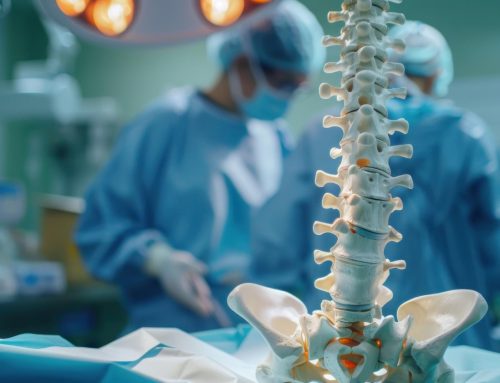


When Spine Surgery is Necessary: Warning Signs
Spine surgery becomes necessary when pain persists for more than 6 to 12 weeks despite conservative treatment, or when neurological symptoms such as progressive weakness, loss of sphincter control or severe numbness appear. These signs indicate that a nerve is compressed and will not resolve on its own.
What is conservative treatment and when is it no longer sufficient?
Conservative treatment includes physical therapy, anti-inflammatory medication, muscle relaxants, and epidural injections. For most spinal problems—including many herniated discs—this approach is sufficient. It is considered to have stopped functioning when, after 6 to 12 weeks of consistent treatment, the pain does not improve or worsens, or when it significantly limits basic activities such as walking, sleeping or working.
Alarm signs that should not wait
There are symptoms that change the conversation from “let’s try conservative treatment” to “we need to evaluate surgery soon”:
- Progressive weakness in a leg or arm that worsens over the days
- Loss of bladder or bowel control — sign of a medical emergency (cauda equina syndrome)
- Numbness in the groin area or inner thighs
- Pain that does not subside at night or with rest, unlike typical mechanical pain
If you have loss of sphincter control or rapidly progressing weakness, this is considered an emergency and requires immediate evaluation, not an appointment scheduled in two weeks.
Why waiting too long can be a risk?
When nerve compression is progressive, the nerve may suffer permanent damage even if the pain is temporarily controlled with medication. Pain does not always reflect the severity of neurological damage — so clinical and imaging evaluation (MRI) determines the correct timing, not just how bad it hurts.
How do you decide if you really need surgery?
The decision combines three elements: the response to the conservative treatment already attempted, the findings on the MRI, and the neurological examination. Dr. Ricardo Martínez Pérez evaluates these three factors together before recommending surgery — never based on an image alone, because many people have MRI findings without symptoms that require surgery.