

Recovery After Spine Surgery: What to Expect Week by Week
Recovery from spine surgery moves through clear stages: active rest during the first week, a gradual return to light activities between weeks 2 and 4, and strengthening through physical therapy starting around month 2. The exact timeline depends on the type of procedure and how minimally invasive it was.
How long does recovery from spine surgery take?
Not all spine surgeries recover the same way. A microdiscectomy or minimally invasive decompression allows walking the same day and resuming light activities within 2 to 4 weeks. A spinal fusion, which involves fixing vertebrae with screws or bone graft, requires biological consolidation that takes 3 to 6 months, even though the patient may already feel functional much sooner.
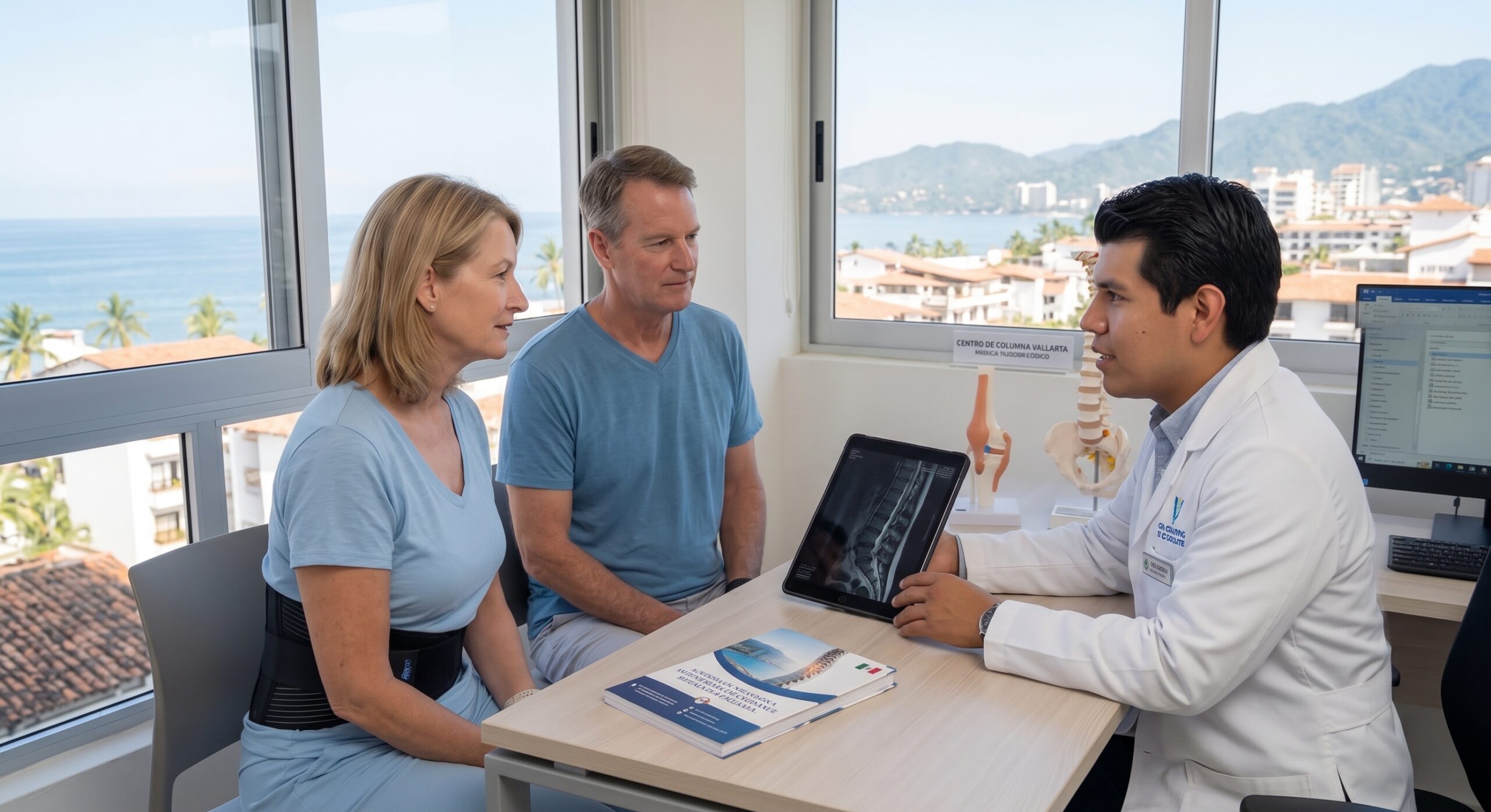
Dr. Ricardo Martínez Pérez explains the expected recovery curve for each patient’s specific procedure before surgery, so they can avoid comparing their experience to someone who had a different type of surgery.
First week: immediate care
The first few days call for active rest, not complete bed rest. Walking short distances several times a day is recommended to support circulation and prevent complications, while avoiding sitting for long periods. Some swelling and discomfort around the incision is normal. Warning signs that require contacting the surgeon immediately: fever, increasing redness, drainage from the incision, or new neurological symptoms such as loss of strength or sensation.
Weeks 2 to 4: gradual return to activities
During this period, most patients who had minimally invasive surgery return to office work and light daily activities. Restrictions on lifting weight, bending from the waist, or sudden twisting movements remain in place. Driving is usually approved once the patient can make an emergency turn without pain and is no longer relying on pain medication that could impair reaction time.
Month 2 to 3: physical therapy and strengthening
Starting around weeks 3 to 6, depending on the procedure, guided physical therapy is introduced. The goal isn’t just pain relief — it’s rebuilding the core strength and spinal stability that were lost during months of pain before surgery. Skipping this stage is one of the most common causes of setbacks or postural compensations that create new discomfort.